


What to Know Before Buying a Pre-Owned Watch Online
Buying a pre-owned watch online is now a normal part of collecting. The watch you are looking for may be in another city or another country, and in many cases there is no practical reason to limit yourself to what is available locally.
What matters is having enough information to understand exactly what you are buying.
A good listing should already answer many of the obvious questions. You should be able to see the actual watch, understand its condition, know what accompanies it and know who is selling it.
There are still a few things worth looking at more closely before making a decision.
Are the photographs of the actual watch?
This is one of the first things to establish.
A pre-owned watch is an individual object. Two watches with the same reference and the same year can still be very different purchases.
One may have a sharper case, a tighter bracelet and its complete original set. Another may have been polished several times, show considerably more wear or contain later service components.
That is why catalogue photography tells you very little about the watch you are actually buying.
The listing should show the individual watch from enough angles to properly understand it. Look at the dial, bezel, case sides, lugs, bracelet or strap, clasp and caseback.
The photographs do not need to hide every scratch. In fact, they should do the opposite.
If there is an area you cannot see properly, ask for another photograph or a short video.
The watch shown should be the watch that arrives.
Look beyond the condition label
Terms such as “excellent condition” and “very good condition” can be useful, but they are still subjective.
Photographs usually tell you more.
Look closely at the areas where a watch naturally shows wear. The clasp often collects scratches first. Polished case surfaces can reveal marks easily. Bezels can pick up dents or scratches. Older bracelets may show stretch.
None of these things automatically make a watch a bad purchase.
A pre-owned watch has usually been worn, and signs of use are normal. The important question is whether the price and description reflect the actual condition.
What you want to avoid is discovering something important only after the watch arrives.
A noticeable dent, significant bracelet wear or damage to the bezel should be visible or mentioned before purchase.
Has the watch been polished?
Polishing becomes increasingly relevant as watches get older.
A careful polish is not automatically a negative. Many watches have been refinished during servicing at some point in their lives.
What matters is how much material has been removed and whether the original shape of the case has been preserved.
Repeated or aggressive polishing can soften edges, change the shape of the lugs and remove some of the definition that the case originally had.
On a relatively recent everyday watch, this may have limited importance. On certain vintage or collectible references, the difference can be significant.
This is also why judging a watch simply as “polished” or “unpolished” can be misleading.
A badly worn unpolished case is not automatically better than a beautifully preserved watch that received a light polish once.
The quality of the case itself is what deserves attention.
What exactly comes with the watch?
Before buying, understand exactly what is included.
For a recent watch, this may include the original box, warranty card, manuals, booklets, tags and spare bracelet links.
Some watches may also have service documentation, purchase invoices or additional accessories.
These items can affect desirability and future resale value, but their importance varies between references and ages.
A complete set on a recent Rolex, for example, will generally be expected differently from the original packaging of a watch that is several decades old.
What matters most is that there is no ambiguity.
If the listing says the watch is a full set, understand what the seller means by that. If spare links are shown, confirm that they are included. If documentation appears in the photographs, it should be clear whether it forms part of the sale.
Has the watch been authenticated and inspected?
Authentication should involve more than looking at the logo on the dial.
Depending on the watch, an inspection can involve checking the reference and serial information, case, dial, hands, bezel, bracelet, clasp and movement.
It may also involve determining whether the components are appropriate for that specific reference and period.
This becomes particularly relevant with older watches.
A watch can be genuine while containing replacement components that affect its originality or value. Parts may have been replaced during servicing over the years, sometimes by the manufacturer itself.
Ask whether the seller has physically inspected the watch and whether they stand behind its authenticity.
When you are spending a significant amount on a watch online, the answer should be straightforward.
Are there any replacement or service parts?
This question does not have the same importance for every watch, but it is worth understanding.
During normal servicing, components such as crowns, hands, bezels, crystals and sometimes dials may be replaced.
On a modern watch, this can simply be part of proper maintenance.
On an older collectible reference, those same changes can affect value considerably.
For example, replacing a worn crown on a modern watch is a very different situation from replacing the original dial on a vintage piece where that dial represents much of the watch's collector appeal.
The point is not that replacement parts are always bad.
The point is knowing what you are buying.
If significant service parts are known to be present, a good seller should be able to discuss them openly.
What is known about the service history?
A documented service history is useful, but its absence should not automatically stop you from buying a watch.
Watches change owners. Receipts get lost. A watch that is twenty years old may have been serviced several times without all of that documentation surviving.
If service records are available, look at who performed the work and when.
If they are not available, focus on the current condition of the watch.
Has it been tested? Is it running properly? Are all the functions working? Does the seller know of any mechanical issues?
With chronographs and watches with additional complications, those functions should also be checked.
External condition is only part of the picture. A watch can look excellent and still need mechanical attention.
Can you ask for additional photographs or video?
You should be able to.
Sometimes a listing gives you nearly everything you need, but there may still be one detail you want to inspect more closely.
Perhaps you want to see the case from the side. Maybe you want a better view of the clasp, the engravings or how the dial reacts to natural light.
A short video can be particularly useful because it shows the watch in a less controlled way than still photography.
You can see how the bracelet moves, how light catches the case and how the watch looks when it is being handled.
For a significant purchase, asking for additional information is reasonable.
A seller who has the watch physically in hand should normally be able to provide it.
Who are you actually buying from?
The seller matters just as much as the watch.
Before sending payment, spend a few minutes looking at the business itself.
Is there a real company behind the website? Are the contact details easy to find? Is there a physical showroom or premises? Can you speak to someone directly?
Independent reviews are also useful.
Look beyond a single review platform if possible and pay attention to patterns rather than individual comments. Consistent feedback over time tells you considerably more than one perfect review.
The seller should also have clear information about authenticity, warranty, delivery and what happens after the purchase.
A well presented website is useful. A real track record is more useful.
What warranty is included?
Pre-owned mechanical watches can develop issues even when they have been properly inspected.
That is simply part of owning a mechanical object made from many small moving components.
Before buying, check whether the watch includes a warranty, how long it lasts and what it covers.
It is also worth knowing who you should contact if a problem appears after delivery.
A warranty is particularly important when buying internationally because returning to the seller in person may not be practical.
The terms should be available before you complete the purchase, not something you discover afterwards.
What happens if the watch is not as described?
This is another question worth understanding before payment.
Read the seller's return policy and make sure you know whether returns are accepted, how long you have to notify them and whether any conditions apply.
There is a difference between changing your mind about a watch and receiving something materially different from the description.
A professional seller should have a defined process for both situations.
Hopefully you will never need to use it, but knowing that the process exists matters.
Is the shipment insured for the full value?
Delivery is not an afterthought when buying an expensive watch online. It is part of the transaction.
Confirm that the shipment is tracked and insured for the full value of the watch.
It is also worth checking which carrier will be used and whether a signature will be required.
If you are purchasing internationally, ask whether there may be customs duties, import VAT or other charges when the watch reaches your country.
These costs vary depending on where the buyer and seller are located.
They are much easier to understand before completing the purchase than after the watch has already been shipped.
Does the price make sense for this particular watch?
Comparing prices online is useful, but comparing only the reference number can be misleading.
Two listings for the same watch may differ because of condition, age, completeness of the set, service history, originality or simply the quality of the individual example.
The cheapest watch is not necessarily the best value.
Likewise, a higher asking price does not automatically mean the watch is better.
Try to understand what is behind the price.
If one example has a noticeably better case, complete documentation and recent service history, it may justify a difference compared with another watch that appears identical at first glance.
This is where looking at the individual watch becomes more important than looking only at averages.
Can you speak to someone before buying?
Sometimes a short conversation answers more than another twenty photographs.
If you have questions about condition, sizing, provenance or simply want someone to talk you through the watch, ask.
This becomes especially useful if you are deciding between two references or are unfamiliar with how a particular watch wears.
A seller should be able to talk about the watch they are offering rather than simply repeat the specification sheet.
Buying online does not mean the transaction has to feel anonymous.
A good online purchase should become clearer the closer you look
Buying a pre-owned watch online inevitably involves some trust, but it should not require blind trust.
The more closely you look at a good watch and a good listing, the more things should make sense.
You should know which individual watch you are buying. You should understand its condition, what accompanies it, what is known about its history, who has inspected it and who is standing behind the sale.
You should also know how it will reach you and what happens if something goes wrong afterwards.
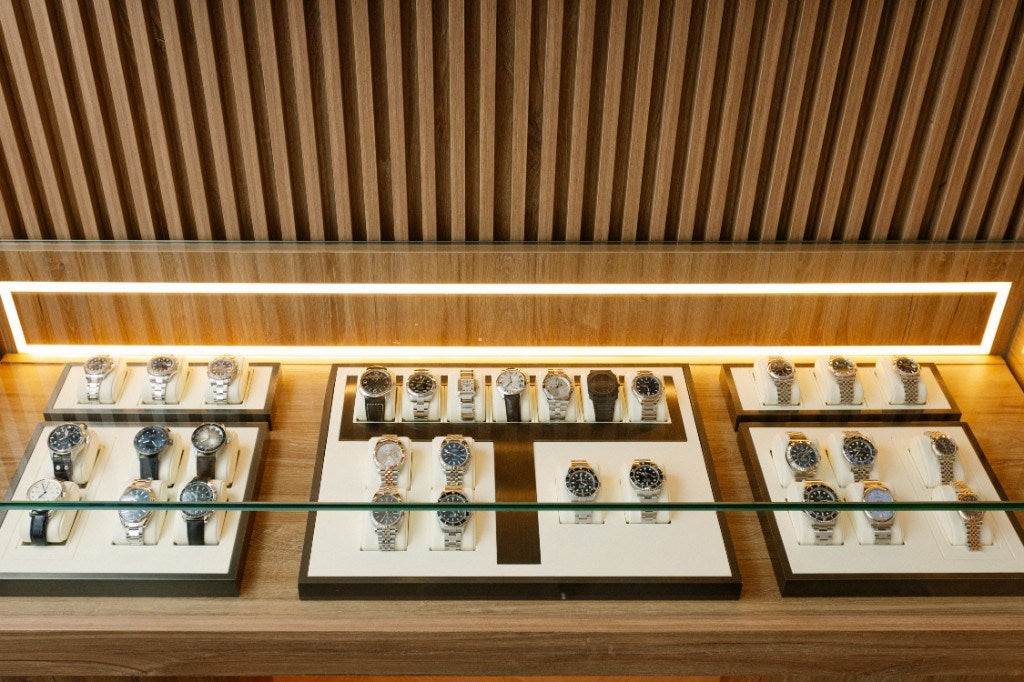
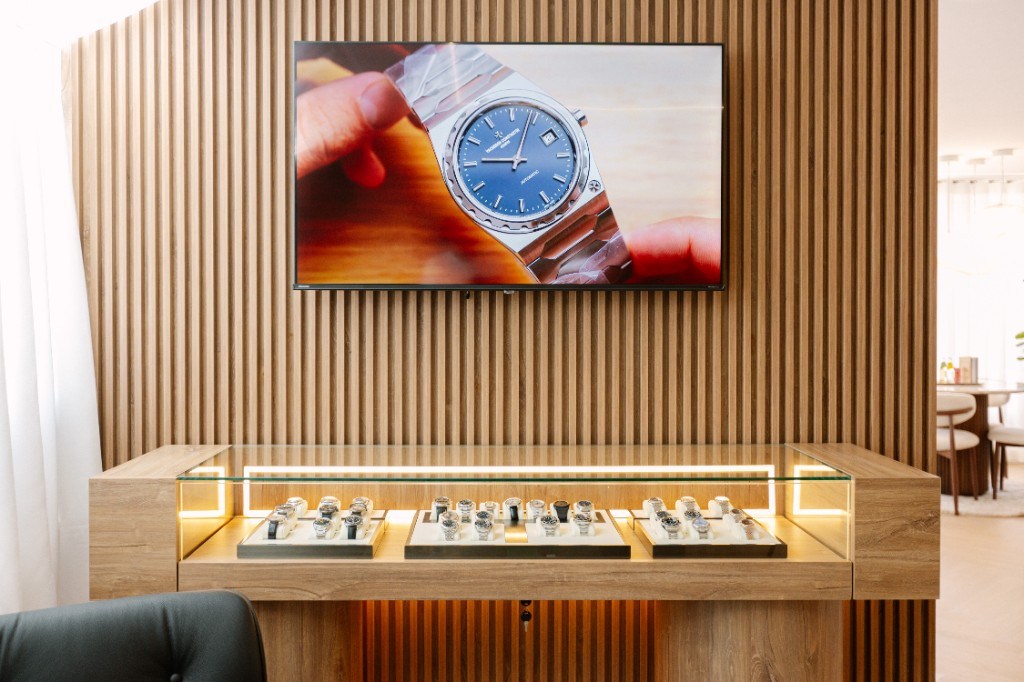
At Midnight, we photograph the individual watches we offer and document their condition and accompanying set before sale. Clients who cannot visit us in Lisbon can also request additional photographs, video or speak directly with us before purchasing.
The aim is simple. Before the watch leaves our showroom, you should know exactly what you are buying.
